Water Management

Water Management
Effective water management is essential for REA’s operations and surrounding communities. We are committed to minimizing water usage, maintaining water quality, and ensuring compliance with environmental standards. Our strategy focuses on responsible water stewardship across all our mills and plantations.
Water is a limited and vital resource that sustains ecosystems, communities, and various industries around the world. A significant portion of global water use is attributed to agriculture, so managing its availability and promoting responsible practices are crucial for ensuring both environmental and economic sustainability in the long run. At REA, we acknowledge the important role water plays in our operations and in the well-being of nearby communities and ecosystems.
With this shared responsibility in mind, we adopt thorough water management practices to promote sustainable usage:
Sustainable Water Use
Optimise water usage in mills and plantations to minimize consumption.
Water Quality Monitoring
Regular testing of river water, groundwater, and tap water to ensure compliance with BOD (Biological Oxygen Demand) and COD (Chemical Oxygen Demand) regulatory standards.
Zero Effluent Discharge
Our mills operate with zero effluent discharge, complying with Indonesian law and RSPO certification standards to ensure that no production by-products enter local watercourses.
Key Highlights (2024)
1.6 m³/
tonne FFB
below our target of 2.5 m³/tonne.
839.33 mg/
litre
(legal limit: 5,000 mg/litre).
2,556.67 mg/
litre
(legal limit: 10,000 mg/litre).
Water is important in the processing of Fresh Fruit Bunches (FFB) into Crude Palm Oil (CPO) and Crude Palm Kernel Oil (CPKO). REA employs strict practices to minimise water usage with a target of 2.5 m³/tonne FFB.
Strategies for Water Conservation
Efficiency Monitoring
- Target of 2.5 m³/tonne FFB, with 2024 achieving 1.6 m³/tonne.
- Daily tracking of water consumption across all three mills.
- Data evaluation to ensure compliance with government permits.
Achievements
Water consumption in all three mills has varied over the years, yet it has consistently stayed below 2.5 m³/tonne since 2013. All three of the group’s mills continued to be comfortably below this threshold in 2024, with overall water usage showed a slight decrease from 1.61m³ per tonne in 2023 to 1.60m³ per tonne in 2024. The reduction was due to utilisation of condensate water for processing in mills and regular preventative maintenance on water management equipment.
Water Intensity (Water Usage m³/FFB Processed tonne)
Water Consumption
Palm Oil Mill Effluent (POME) is a by-product generated during the production of Crude Palm Oil (CPO) and Crude Palm Kernel Oil (CPKO). We manage POME in a responsible manner to maximise its value while reducing its environmental impact.
Strategies for POME Management
- Enclosed methane capture systems reduce emissions.
- Biogas from POME generates electricity, powering mills and surrounding areas.
POME MONITORING FOR BOD AND COD
REA strictly monitors BOD and COD levels to ensure water quality remains compliant and within environmental regulations and specified legal limits.
1. Water Quality in Surface Water
- Regular monitoring of BOD and COD levels in surface water to detect any irregularities.
- Results in 2024:
1.6 mg/
litre
(legal limit: 3 mg/litre).
7.0 mg/
litre
(legal limit: 25 mg/litre).
BOD-COD Result analysis of Surface Water
2. Compliance Verification
- Monthly testing of BOD and COD levels in POME to ensure that it is below the legal limit for land application in Indonesia, being 5,000mg/litre and 10,000mg/litre, respectively.
- Verification of BOD and COD in our mills by Dinas Lingkungan Hidup Kabupaten (The Regency of Environmental Services) every 6 months.
3. Corrective and Preventative Measures
- Implementation of best agricultural management practices.
- Regular patrols involving local communities.
- Training for stakeholders on water quality standards.
Achievements
Water consumption in all three mills has varied over the years, yet it has consistently stayed below 2.5 m³/tonne since 2013. All three of the group’s mills continued to be comfortably below this threshold in 2024, with overall water usage showed a slight decrease from 1.61m³ per tonne in 2023 to 1.60m³ per tonne in 2024. The reduction was due to utilisation of condensate water for processing in mills and regular preventative maintenance on water management equipment.
Optimise water usage in mills and plantations to minimize consumption.
Key Highlights (2024)
SmallHolder INclusion for Ethical Sourcing (SHINES)
To help independent smallholders meet EUDR and RSPO standards while promoting forest conservation and sustainable livelihoods. Running from 2025–2027, it supports 600 smallholders, protects approximately 10,000 hectares of forests, and benefits six villages through training, capacity building, and income diversification. For more information, please refer here.

Plasma Programme
Developed to support local communities, Plasma schemes ensure sustainable plantation management and provide consistent income through FFB sales. These cooperatives benefit from REA’s expertise and alignment with RSPO, ISCC and EUDR certifications, along with other global certifications and standards.
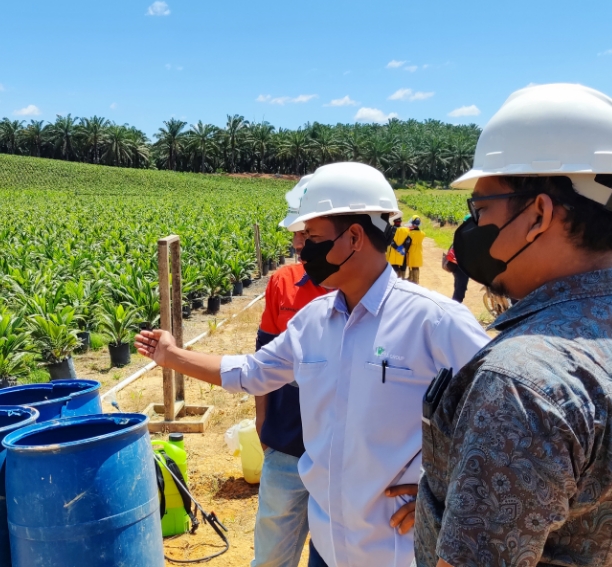
Program Pemberdayaan Masyarakat Desa (PPPMD)
Launched in 2001, this initiative supports 10 cooperatives with seedlings, fertilisers, technical assistance and training, with costs repaid interest-free.
Independent Smallholders (ISH)
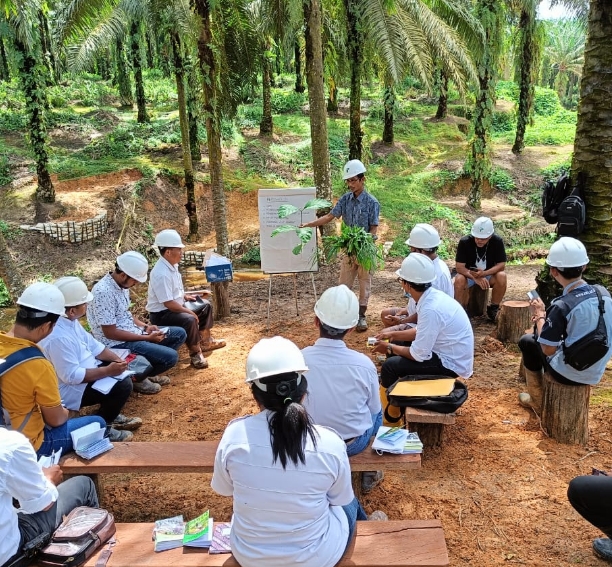
Over 1,000 independent smallholders cultivating over 7,000 hectares benefit from training, market access and tailored support designed to achieve RSPO, EUDR, ISCC and other global certifications. Among these initiatives is the SHINES programme, a customised initiative designed to support smallholders by offering training on evolving standards whilst promoting forest conservation. For more information, please refer here.